Chiropractic

Chiropractic
The solution is simple!
Showing posts with label anxiety. Show all posts

Saturday, May 16, 2015

The Happy Point

Written by Dr. Joe Mondoux

Another brilliant post from Dr. Joe Mondoux. A nice finishing touch to our unofficial "Mental Health Awareness" week. Get in touch with your Happy Point!

- Dr. P

Serotonin: a hormone that contributes to feelings of well-being and happiness. 

90% of serotonin is located within the gastrointestinal tract of humans, specifically in enterochromaffin cells. These cells line the gastrointestinal tract and release serotonin when you consume food. Ever wonder why you tend to be in a better mood while eating? This is part of what is known as the “gut-brain connection”. What we eat has an enormous impact on our nervous system. Our nervous system controls everything. Every sensation we experience (sight, sound, smell, touch, taste, pain, temperature, vibration, proprioception…the list goes on), every movement we make, every breath we take, every heartbeat, everything that makes us human and alive is due to our nervous system.

Why did I go on about the nervous system and what happened to the missing 10% of serotonin in our body? If you haven’t figured it out yet, the other 10% comes directly from our nervous system. It comes from the master controller of the body - the organ that is so complex that the more we find out about it the more questions we have - the brain. The raphe nuclei located deep in the brainstem release serotonin into the brain. Antidepressants and other SSRIs (selective serotonin re-uptake inhibitors) are believed to target these nuclei to help lengthen the time serotonin is cycling through the body, in turn leading to increased moods and decreasing the state of depression. Now how do we increase the effects of serotonin? 
  • We could eat more to release more serotonin, but that has its obvious downfalls 
  • We could take SSRIs to ensure the serotonin sticks around longer, but that isn't too good for you over the long term
  • We could influence the brainstem to release more serotonin, but you can’t do that…or can you?

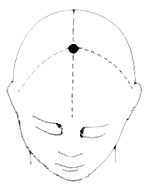
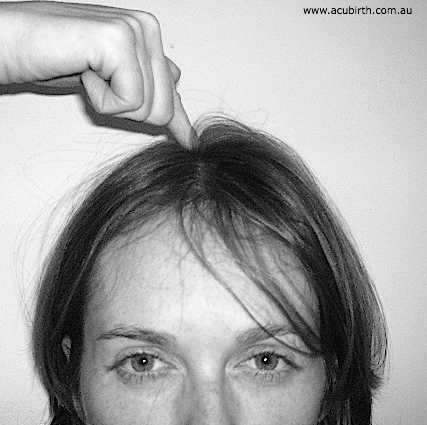
“The Happy Point," the namesake of this post, is a scientifically proven way to release more serotonin from the brainstem. In fact, the whole time I have been writing this post I have been stimulating my Happy Point. Now I know what you’re thinking, “Dr. Mondoux, that’s gross! We don’t want to hear that!” To which I would respond “Don’t knock it until you try it…oh and get your mind out of the gutter!” The Happy Point, also known as GV-20 in acupuncture circles, is a traditional acupuncture point located on the top of the scalp midway between the points of your ears. Stimulation of this point with an acupuncture needle has been shown the increase the release of serotonin and all the good feelings that come with that.


Acupuncture may seem bizarre to some of you and to be honest, it did to me at first. It wasn't until I learned more about it, the scientific research behind it, the anatomical reasons why these points are used, and began using it in my daily practice that I realized the profound affects you can achieve with this millennia-old technique. One simple 0.3 mm thick piece of steel, inserted 1-2 mm into the scalp can have an astounding effect on the body.


Next time you feel stressed, anxious, overexcited or down, consider the Happy Point as a natural way to improve your mental and physical state (don’t knock it until you try it!).

As an aside, stimulating this point with manual pressure, or acupressure, is another way to stimulate serotonin release. It's not as effective as acupuncture, but in the absence of a trained professional and the required equipment, fingertip pressure on this area can be a huge relief! - Dr. P

Helping Anxiety

Written by Dr. Kathy Dooley on Dr. Dooley Noted May 5, 2015

Another gem from Dr. Kathy Dooley. We've now talked about grief, depression, and here's one about their not-too-distant cousin, anxiety (also covered here). Coping strategies have been identified here. This is a conversation that occurs all too often in MD offices everywhere. Think about what you're putting in your body and why. Think about symptoms, and think about causes. Don't always try to take shortcuts.

- Dr. P

At age 21, I let anxiety get the best of me.
I was hospitalized with a panic attack. 
I was quickly offered a copious amount of medication, mostly in the form of anxiolytics (Klonopin) and benzodiazepines (Xanax). 
I’ll never forget the interaction with my doctor. 
Picture me 15 years younger. 
Doc: “Why don’t you take Xanax? It’s wonderful for diminishing anxiety.” 
Dooley: “I’ve read that, sir. But what is creating my anxiety?”
Doc: “It’s hard to say. Probably your intense classes.”
Dooley: “But I LOVE my classes. I love school.”
Doc: “Maybe it’s your boyfriend?”
Dooley: “He’s amazing. These things don’t make me anxious. I just get hit with it, as if out of nowhere.”
Doc: “Listen, I understand. My wife suffers from anxiety. She has taken a Xanax every morning for the past 20 years. Her anxiety is under control.”
Dooley: “If it were under control, she wouldn’t need Xanax.”
Doc: (blank stare) 
So, I walked out. Thank god I can think for myself, because the pressure from family and friends to take drugs was insurmountable. 
Funny how non-anxious people want to tell anxious people what they should do. 
A client of mine recommended chiropractic.
I went – and obtained immediate relief. 
The chiropractor taught me how to breathe with my abdomen, so as not to overuse muscles in the chest and neck that might trigger anxious breathing. 
Like any solid rehabilitative strategy, my anti-anxiety drills became a part of my everyday life. 
A crowded subway train becomes a contest with myself on exhale prolongation. 
If I feel my pulse race or my heart increase in beats, again I turn to the breathing to bring respiration and pulse rate down. 
When I run, I make conscious efforts to maintain my breathing cylinder, avoiding chest breathing, rib flaring, and air gasping. 
These things did not come naturally to me.
Anxiety came naturally to me. 
So, interventions were necessary. 

I chose to not take drugs. 

Breathing drills were challenging at first. I had to set alarms to remind myself to breathe. 
But with time and commitment, I started naturally going to the drills to feel my best. 
Conquering my own anxiety has drawn anxious people to me like a magnet. 
I never knew that conquering my own struggle would have numerous beneficiaries. 
This inspires me to make even more conscious efforts to work on anxiety prevention. 
After all, we anxious people need to train for the event that may happen some day. 
I haven’t had a panic attack in countless years. 
But I’m ready in the event that I do.
If you think you don’t have a choice but to take anxiolytics, you are mistaken. 
Benzodiazepines and anxiolytics are part of a standard care protocol for anxiety. 
That doesn’t mean you have to follow that standard. 
I have standards of my own. 
I don’t want to take a pill to control me. 
I want to do the work to see myself out of discomfort. 
Drugs are easy. Drugs also have consequences. A major consequence of anxiety drugs is that anxiety tends to increase without their usage. 
They aren’t fixing anything in the long run. 
With anxiety, you learn you are in control as much as you chose to be.
I hope you know you have options.  
As always, it’s your call. 
- Dr. Kathy Dooley 

The Look of Depression

Written by Dr. Kathy Dooley on Dr. Dooley Noted May 9, 2015

In keeping with the theme of mental health this week, I'd like to share a couple of articles from Dr. Kathy Dooley that sync right in. Her style is simple, eloquent, and almost entirely based on personal experience. Enjoy!

- Dr. P

Depression is stigmatized. 
People don’t tend to want to be around people who are depressed. 
I should know. I’ve suffered from depression. 
There were moments when I opened up about the way I felt to my closest friends. 
Not knowing how to help me, they chose to no longer be my friend.
So, I learned to mask everything I was feeling. I knew depression had a look I wasn’t willing to show. 
The more depressed I felt, the more I would internalize. 
I spent my most struggling moments alone, fearing I would be burdensome or lose more friends. 
In therapy, I learned to be more honest with my feelings. And if I lost friends for it, then so be it. If they aren’t concerned with my well being, then the friendship isn’t real, anyway. 
The current nature of social media makes showing truth to friends very tough. 
I remember attending a seminar last year, and there was a moment that I had visibly showed stress. 
A person I had only known on social media pulled me to the side and said the following:
Person: “You seem edgy.”
Dooley: “Yeah, I had a moment of stress. I try not to hide much.”
Person: “I just assumed you never got stressed.”
That shook me. 
Of course I experience stress! It’s the only way to change and experience growth. 
But this woman had an idea she had formed about me from social media. 
I’m fairly upfront about embracing struggle in my writing. 
But that night, I looked at my pictures. 
I couldn’t find a single one that showed me struggling. 
I had cherry-picked the photos of my life, showing me almost always smiling, without an ounce of stress nor edge. 
I had given a visual image to her of who I was, based on pictures she witnessed. 
And I had set her up to see me a certain way. 
Last night, I read a thread about a college track star that took her own life at 19. 
All of her pictures on social media showed the perfect joy of a perfect life. 
A beautiful girl was suffering from depression – but her social media accounts didn’t reflect that.
She thought something was wrong with her because all of her friends seemed so happy on social media. 
But they even told her they, too, were struggling. 
She didn’t believe them – because of what she saw them post on social media. 
She felt alone. So, she took a nine-story leap off a parking garage. 
People with depression need to know that other people are struggling, too. 

We all need to hide less. 
I write about my struggles, but I need to do more about showing more struggles. 
We don’t need to constantly lament. 
But we could all stand to show more honesty, so that others know they aren’t alone in their struggles. 
As always, it’s your call. 
- Dr. Kathy Dooley 

Friday, May 15, 2015

Hoping to Cope

Written by Dr. Prathap Addageethala

Last month, I wrote an article about grief, and the theories surrounding how human beings feel when confronted with a loss. Too often, people are left in the dark, grasping for positive ways to channel the myriad emotions that accompany grief. Many times this can lead to destructive behaviours such as alcoholism, drug addiction, or channeling anger towards friends or loved ones. The truth is that no loss is easy to deal with, and depending on your personal experiences, each loss can reside in you differently, as they might from the person to person.

Grief, in its many forms and variations, can be complicated in unexpected ways. At times a fleeting memory or thought can trigger a rush of emotions and can have automatic physical effects. Surely anyone with a failed romance can recall a loss of appetite upon seeing a picture of the ex-partner, or that pang of anguish when you think of the moment that favourite sweater caught a snag and tore. The important things to remember are that these are natural reactions, and that losses are bound to happen.

The following is a list of suggestions that can help you get through tough times positively, and may also have lasting effects to improve many other areas of your life. Some are "common sense" applications, and others have been found through my interactions with healthcare practitioners. Take a deep breath and enjoy.

EXERCISE
Let's be honest, you knew this was coming. But I'm not making it up! Oodles of research shows that through various groups, controls, and trials, exercise unequivocally can improve various mood states, anxiety and depression. Aim for 30 minutes of low intensity exercise daily, and jazz it up every so often with something new, like a leisure sport or activity. Take your dog for a walk on a longer, more scenic route. Join a running group that suits your experience level. Play tag with your kids at the park! Exercise doesn't have to include a gym, yoga pants, or profuse amounts of sweating. If you're feeling the effects of a loss, just changing your scenery actively is a step in the right direction, quite literally.

Go have fun! Yay!

MEDITATION
Common misconception: you don't need to be a Buddhist monk or a professional yogi to know how to meditate. Meditation is a simple focus based exercise for the mind and body. The response from meditation is so pronounced, even from short periods of time on a daily basis, that it is regularly prescribed by progressive MDs as opposed to medicines. On Functional MRI studies, the areas of the brain responsible for attention, mood, anxiety, and emotional responses were highly active in subjects engaged in meditation. The benefit of this is similar to giving your brain a workout - only it doesn't tire out - it feels rejuvenated (also similar to the runner's high distance runner's may experience). It gives the brain a boost, just where it's needed. If you're new to meditation, start with simple "Noticing your Breath." The process is simple. Take 5 minutes, turn off your phone, turn your monitor off, and close your eyes. Breathe in through the nose slowly, and breathe out through the nose as well. All you want to focus on is the feeling of the air passing in and out of your nostrils. If any unwanted thoughts arise, anything outside of the concentration of air passing in and out of your nose, gently bring yourself back. That's it! You can also try one of my favourites - yoga nidra - which is also referred to as "guided meditation" or "body scan." This may require a slightly longer amount of time, the use of headphones, and preferably a mat to lie on. Try this 10 minute clip, care of my friends at YouTube.

All you need is yourself and a chair.


MINDFULNESS
The art of mindfulness has really picked up steam in the last few years among mental health practitioners. While technically a method of meditation, mindfulness goes a bit beyond focused attention and concentration. Instead, this thought process focuses on the present-time, and aligning your day to day activities with a level of detachment. The core beliefs of mindfulness involves "staying present" and treating yourself with kindness. From Psychology Today, the definition is:

Mindfulness is a state of active, open attention on the present. When you're mindful, you observe your thoughts and feelings from a distance, without judging them good or bad. Instead of letting your life pass you by, mindfulness means living in the moment and awakening to experience.

In other words, realize that we as human beings are subject to a number of thought processes about everything. The key is to approach each situation with kindness to yourself. Instead of kicking yourself about feeling one way or another, simply take a moment to recognize that you are feeling a certain way about something, and allow yourself that moment. Another staple of mindfulness is to refrain from being reactive, giving yourself space to feel. Bringing every moment back to the present is a life-long learning process, and requires just a bit of patience. In each situation, gently bring yourself back to the present and avoid judging yourself on your actions. For some additional information on mindfulness, please visit Psychology Today - a great collection of articles regarding how you can start to include mindfulness in your everyday.


VOLUNTEERING
Our time has become ever shorter as we advance through the age of technology. From the same position at our desk, we can order a pizza, donate to disaster relief, and diagnose ourselves with various conditions (WebMD syndrome). In other words, we can keep ourselves remarkably busy with relatively little physical effort, but we tend to exhaust our mind's resources. We tend to stay fixated within our own world, constantly thinking of ways to survive in or improve our current station. Volunteering is a form of constructive escapism. Mahatma Gandhi famously said "The best way to find yourself is by losing yourself in the services of others." By helping others, whether human or otherwise (shout outs to our furry friends), we are able to escape our current situation and let another benefit. This has tremendous potential to uplift us, out of whatever funk we may exist. Sometimes it's the change of perspective, such as working with the homeless, which can show us that our current situation could always be worse. Other times, it could be the gratitude shown by those we are helping. Lastly, it just feels good to help, without any expectation of compensation. An hour a week can have huge impacts on your community, your neighbours, and most importantly, on your own self-belief.


HOBBIES/SKILLS
We all don't want to be surrounded by loved ones when we're grieving or dealing with loss. Quiet reflection is a wonderful way to clear your mind, clarify your intentions, and even chart a course. A line can be crossed if we spend all of our time in isolation. It's one thing to be introverted and shy. It's completely a different ballgame once we let our grief and unhappiness create an unintentional space around us. Enter the hobbies you always wanted to have. Why not now? This is one of the best times to get creative, to use the time to yourself to be productive and constructive towards your own life. Start learning a new language, take up crocheting, perfect your rock skipping at the local pond. Take pleasure in gaining new skills or polishing old ones. Create!


THE PROFESSIONALS
This is less of a coping strategy than it is a recommendation. If you've ever thought about seeking the help of a mental health professional, by all means, please go and see how they might be able to help. A few years ago, amidst the stress of preparing for board exams, regular class work, and balancing a roster full of patients as a student intern, I had a personal relationship end in calamity. I felt broken! I swallowed my pride, and entered the office of one of our college's counselors, and to this day, I feel like it was one of the best decisions I ever made. I had no idea what I would talk about, and I had no idea how she could help me, still I went. She very quickly made me see that the room we met in, her office, was a safe environment. Over the next few weeks we met once or twice, for a full hour. The most positive part of the experience was that she never judged, decided anything for me, or "diagnosed" illnesses. She simply made suggestions, steered conversations around or towards certain topics, and allowed me to come to my own conclusions. Oh, and she also opened my world up to mindfulness.

There's a lot of stigma surrounding accepting care from a mental health professional. Don't let that stop you. No, you're not crazy, nor should you let anyone make you feel that way. You should be proud of yourself, you're taking steps towards bettering your health. Mental health practitioners offer objective, 3rd party advice; something you cannot receive from your parents or your friends. Having an outside professional work with you can deliver clarity, and often be invaluable in removing clutter from complicated situations.

- Dr. P

Monday, March 30, 2015

On The Run From... Running?

Written by Dr. Prathap Addageethala

It's getting warmer out there, and people are starting to stretch their legs by getting out and putting in a few kms on the road. As North America thaws out from an exceedingly frigid winter, it's rolling into the hottest part of the year here in Southern India, where temperatures can soar past 37C with regularity.

I am planning to run a 10K for the very first time in May of this year. There. I said it. You know what they say, "speak your dreams into existence." And I'll be honest with you, I'm a bit nervous. That seems fairly normal considerig the longest race I have ever run was while I competed for my elementary school's cross country team. I can't even be sure that it was more than 5km back then, so if it wasn't, then 5km was my all time longest run. EXACTLY HALF OF HOW FAR I NEED TO GO.

In high school I was a decent athlete. During our mandatory timed mile run in Phys.Ed I posted a  respectable 6 minutes and change; during our 12 minute timed run, I chugged out 7 laps. A lot has changed since then! Two degrees, multiple injuries, and two moves across international borders later, I'm a slightly overweight and under-active healthcare practitioner. Doctors are human too!

I have had a longer hiatus from training and regular exercise than I'm proud to admit. So, naturally, my worries in running this middle distance race stem from that; will I be able to finish? will I injure myself? After doing some light reading about starting a running regimen, I noticed a few things. It seems that all fledgling runners go through a period of uncertainty. Everything that I read indicate that they are all normal concerns that engaging in a new physical form of rigorous training elicits. And rightfully so!

Common injuries that occur to novice runners (fairly common in experienced runners as well!) include shin splints, IT Band syndrome, cramping, sprains, and other strain based injuries. By and large, these injuries happen due to poor warm up/cool down strategies, and a case of "too much, too soon." As with any other form of exercise, it is best to build up to a challenging routine to give your body a chance for success. Feeling DOMS (delayed onset muscle soreness) is normal if you are just starting out, or just getting back into working out. Try to challenge yourself in each successive workout, keep an eye on your form (there is a proper way to run, believe it or not), and listen to your body.

Here are some tips and tricks on navigating the road, the trail, or the treadmill as you prepare yourself for your next athletic achievement! Incidentally, since I'll be on a major training kick in the weeks approaching the big race, I'll be blogging more about running as I come across valuable information to share. Keep an eye out for the "Running" folder in the coming weeks.

Make a run for it with these training tips:


  • Stay hydrated! A common recommendation is to drink 8 cups of fluids a day. This is just a general guideline and not a hard and fast rule. Obviously if you are sweating profusely from an uptempo workout, you should be replacing the fluid lost with an extra cup or two of water, and it is recommended to replace electrolytes (salts) with a sports drink. This is a huge topic, and will be covered in a later blog entry. YOUR GOAL: 3L (12 cups) spread through the day. Here's a life hack on how to stay evenly hydrated through the day.

  • Warm up dynamically (actively). Doing sport specific movements will aid you further in achieving athletic performance than your average hold-that-position (static) stretch. A healthy warm up for running may include a light jog for 5-10 minutes, followed by 1-2 sets of lunges, prisoner squats, leg swings, windmills, jogging butt kicks, walking knee raises, and walking mummy kicks. YOUR GOAL: Improve your flexbility and endurance of the muscles you engage most during your sport activity.

  • Keep records but don't let it discourage you. Set some goals and work your way towards them. Your best bet to know if you're improving or subconsciously slacking off is to keep an accurate record of your running activities. Some people use heart rate monitors and other gadgets to keep electronic or digital logs of their runs, which is a solid idea. I personally use an app on my smartphone called MapMyRun, which features a simple and easy interface, and excellent in-run guidance. Only drawbacks to this app are that it doesn't do much for a treadmill workout (other than keep time), and you have to keep a clunky smartphone on your person during your run. YOUR GOAL: Record each workout, and challenge yourself to improve your times on a week to week basis.

  • Get rest. I can't emphasize this one enough. Your body grows and repairs itself largely while asleep, so make sure you are doing what you can to get adequate amounts. In addition to the typical grogginess, mind fog, and irritability that one feels when not well rested, we also become more susceptible to injury and cramping. A growing body of evidence also shows that using an electronic device with a screen (smartphone, laptop, tablet, etc) just before sleeping can lead to a decreased quality of sleep. YOUR GOAL: 6-7 hours of quality sleep each night, turn off your electronics at least 30 mins before bed.

  • Wear proper footwear. Unfortuately those 5 year old sneakers that you wear during any and all athletic undertakings will not suffice when it comes to a renewed dedication to running. Seeking out a running professional at a running specific sporting goods store is a great way to get a shoe that is tailor made to your body type and needs. It is easy to pick the wrong shoe from myriad choices on the shoe rack, so in this sense, a little research goes a long way. I really benefited a ton from Runner's World's "shoe advisor." And I really liked their tool for determining your own arch height and foot type. With moderate usage (around 25-30 km a week) it is recommended to get new shoes every 6-8 months. Even though the shoe might remain in good shape from the outside, the heel pad and cushions for the sole of your foot might be too thin to effectively absorb the repeated pounding of the pavement. Barefoot running is a completely different animal, so stay tuned for an article about that. For average height arches, and neutral foot roll, I can't think of a better shoe than Asics Gel Nimbus series. YOUR GOAL: Assess your footwear situation, and pony up for a decent pair of running shoes that are used exclusively for running. Runner's World has an excellent assortment that can fit every budget.

  • Supplement intelligently. As I mentioned above, each of these tips and tricks can be their own blog entry or fill many pages in a text book. According to Examine.com (a trusted source for accurate and succinct health information backed by scientific research) the three supplements that absolutely work include fish oils, vitamin D, and creatine. Fish oils are excellent for joint pain reduction (at higher dosages) and decreasing free floating fats in the bloodstream which is fantastic for heart health. Vitamin D is essential for bone health, and is necessary in order to absorb Calcium, the bone-building staple. Creatine was a much-maligned supplement about 10 years ago, when claims that it created a higher incidence of kidney stones surfaced. The reality is that any protein-dense diet (with or without creatine) can create kidney stones and gout if proper measures aren't taken to hydrate responsibly. Creatine supplementation provides extra energy for your cellular processes, and has been shown to improve physical performance, and boost muscle growth. YOUR GOAL: Regular supplementation with a recommended multivitamin, fish oils, and creatine can help you surpass performance obstacles. Keep in mind, these are supplements, you know, in addition to a balanced diet rich in green leafy veggies, lean protein, and healthy fats.

It is always better to check with your MD regarding your current blood chemistry and physical fitness before engaging in a new, vigorous exercise regimen. Your chiropractor can help you manage your performance by decreasing joint pain and stiffness, improving your range of motion and flexibility, and by keeping your nervous system in optimal shape. 

See you out there!

- Dr. P

Tuesday, March 17, 2015

The Anxiety "Virus"

Originally written by Dr. Kathy Dooley on October 7th, 2013
Re-posted with permission on October 7th, 2013
Re-re-posted here on my brand spanking new blog on March 17th, 2015

First and foremost, let me begin this post by introducing my inaugural guest contributor, Dr. Kathy Dooley. Aside from being an inspiration and mentor personally, while I trained to be a Doctor in the world's greatest profession, Dr. Dooley is herself an accomplished Doctor of Chiropractic, anatomist, and entrepreneur. The long list of her credentials and impressive resume can be found here. I will be including some of her unique and impressive posts, unedited, unadulterated, here on a regular basis, you can all thank me in advance! Please have a look at her full website Dr. Dooley Noted and peep her profile on my Regular Contributor Pages.


Now may I introduce, Dr. Kathy Dooley....
- Dr. P

Someone close to me has been experiencing exorbitant anxiety and stress.
She endured so much that it sent her to the emergency room, where she experienced bloodwork analysis and various other tests, including a CT scan.
Everything came back negative.
Even though she ran no fever nor had any positive swabs or lab tests, the medical staff blamed her illness on a virus.
Hmph. I call the bluff.
What if she was sick from excess anxiety? Is this not likely?
Anxiety leads to a hyperventilated-type breathing, which alters pH and changes biological functioning.
You can't control breath, and you start feeling anxious. You start feeling anxious, and you can't control breath.
It's a vicious cycle.
If you can't control breath, you start messing with gas exchange. You start altering gas exchange, and you end up feeling pretty sick.
Maybe, people misconstrue it as a virus.
There is little evidentiary support that my loved one had a virus. But she left the hospital with that diagnosis, along with a hefty bill to her insurance.
Manage your stress. Exercise. Breathe well. Eat well. Get analyzed. Get corrected.
Help yourself. Protect yourself against the anxiety "virus."
- Dr. Kathy Dooley