Chiropractic

Chiropractic
The solution is simple!
Showing posts with label chiropractic. Show all posts

Monday, May 18, 2015

Chiropractic x CrossFit

Written by Dr. Benjamin Bluestein

CrossFit is sweeping the globe, one box at a time. For some, CrossFit is a source of motivation and health. For others, it's a source of fear, and injury. Luckily, there's help on the way! Dr. Bluestein's first post featured on this blog talks about all the major ways Chiropractic care can help with a CrossFit athlete's goals, and how it can work as a safety net to alleviate current injuries, or prevent future injuries. Been giving CrossFit a good, hard look as a fitness option? Definitely read on.
- Dr. P

Crossfit & Chiropractic

I have patients who participate in the sport of Crossfit. Crossfit is “the SPORT of fitness”. Crossfit participants and athletes are incredibly committed, driven and hardworking individuals. Their goals are to improve time, weight and volume lifted. Crossfit athletes push themselves physically everytime. People must realize that Crossfit is a sport, just like basketball or football.

Is Crossfit Safe?

There is risk involved in any activity or SPORT. Crossfit is not exempt from this rule.Crossfit takes safety seriously and many gyms/boxes have mandatory “on-ramp” classes before participating in full workouts. Crossfit participants should be supervised by certified/qualified coaches. Anyone considering participating in Crossfit or any athletic sports should understand that there are prerequisites and risks with all movements.

What are the typical Crossfit injuries seen in a Chiropractic office?

Crossfit athletes can push themselves so much that it can lead to overuse muscle and tendon injuries, as well as spinal and extremity joint dyfunctions. Dysfunctions may or may not cause pain but over time may result in a pain and or more serious problems. I always tell and teach patients to listen to their body and not to push too hard if they are experiencing any discomfort.
In my experience, Crossfit participants typically have restricted range of motion and recurrent stiffness in the shoulders and hips. However the most serious complaints I have received in my Chiropractic office is lower back pain.

What about Crossfit makes lower back injuries so common?

Lifting exercises such as the squat and deadlift are done with high volume and weight. If these exercises are done with proper posture and technique they are great for functional core and leg strength. A proper moving spine and hips are required to perform these exercises. If an individual does not have the proper range of motion or ability prior to attempting the squat and deadlift they can become injured. For those with the ability, as athlete becomes tired, their form can be affected and eventually these exercises can cause injury.
Overhead exercises (snatch, thrusters, presses etc. ) are also performed. If a participant doesn’t have the prerequisite movement at the shoulders and mid back, compensations problems in the lower back will result. Take a look at the video below:
Do you look like this when you perform overhead activities? Time to see a Chiropractor that can determine why and how to fix it. Manual therapy and functional movement correction that Chiropractors provide are very effective at not only prevention but recovery as well.

How can Crossfit gyms/boxes and Chiropractors work together?

A Crossfit athlete’s goal is to maximize their body’s full athletic potential. Crossfit athletes are required to maintain their bodies by participating in proper training, nutrition and sleep. A Chiropractor’s goal is to optimize the patients’ body through manual treatment and advice on training, diet and treatment. Crossfit gyms can also help general chiropractic patients become more physically active in their own lives.

Our philosophies and goals go hand-in-hand. Regular treatment from a Chiropractor will allow for the maintenance and overall performance of the body. Regular Crossfit and physical activity can help people become healthier.

Chiropractors can also assess those thinking about joining Crossfit to determine if they have the prerequisite abilities.

What do the Crossfit athletes have to say?

If you don’t believe me, listen to Rich Froning Jr. Rich is the 4 x reigning and defending “Fittest Man on Earth”. He has won the Reebok Crossfit Games continuously since 2011 to 2014. He is an advocate for Chiropractic care and believes Crossfitters can benefit from seeing a Chiropractor


Saturday, May 16, 2015

The Happy Point

Written by Dr. Joe Mondoux

Another brilliant post from Dr. Joe Mondoux. A nice finishing touch to our unofficial "Mental Health Awareness" week. Get in touch with your Happy Point!

- Dr. P

Serotonin: a hormone that contributes to feelings of well-being and happiness. 

90% of serotonin is located within the gastrointestinal tract of humans, specifically in enterochromaffin cells. These cells line the gastrointestinal tract and release serotonin when you consume food. Ever wonder why you tend to be in a better mood while eating? This is part of what is known as the “gut-brain connection”. What we eat has an enormous impact on our nervous system. Our nervous system controls everything. Every sensation we experience (sight, sound, smell, touch, taste, pain, temperature, vibration, proprioception…the list goes on), every movement we make, every breath we take, every heartbeat, everything that makes us human and alive is due to our nervous system.

Why did I go on about the nervous system and what happened to the missing 10% of serotonin in our body? If you haven’t figured it out yet, the other 10% comes directly from our nervous system. It comes from the master controller of the body - the organ that is so complex that the more we find out about it the more questions we have - the brain. The raphe nuclei located deep in the brainstem release serotonin into the brain. Antidepressants and other SSRIs (selective serotonin re-uptake inhibitors) are believed to target these nuclei to help lengthen the time serotonin is cycling through the body, in turn leading to increased moods and decreasing the state of depression. Now how do we increase the effects of serotonin? 
  • We could eat more to release more serotonin, but that has its obvious downfalls 
  • We could take SSRIs to ensure the serotonin sticks around longer, but that isn't too good for you over the long term
  • We could influence the brainstem to release more serotonin, but you can’t do that…or can you?

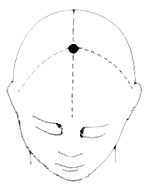
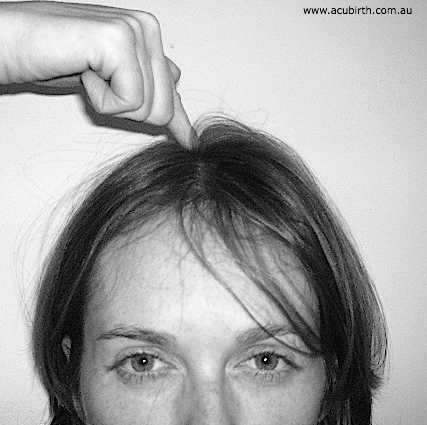
“The Happy Point," the namesake of this post, is a scientifically proven way to release more serotonin from the brainstem. In fact, the whole time I have been writing this post I have been stimulating my Happy Point. Now I know what you’re thinking, “Dr. Mondoux, that’s gross! We don’t want to hear that!” To which I would respond “Don’t knock it until you try it…oh and get your mind out of the gutter!” The Happy Point, also known as GV-20 in acupuncture circles, is a traditional acupuncture point located on the top of the scalp midway between the points of your ears. Stimulation of this point with an acupuncture needle has been shown the increase the release of serotonin and all the good feelings that come with that.


Acupuncture may seem bizarre to some of you and to be honest, it did to me at first. It wasn't until I learned more about it, the scientific research behind it, the anatomical reasons why these points are used, and began using it in my daily practice that I realized the profound affects you can achieve with this millennia-old technique. One simple 0.3 mm thick piece of steel, inserted 1-2 mm into the scalp can have an astounding effect on the body.


Next time you feel stressed, anxious, overexcited or down, consider the Happy Point as a natural way to improve your mental and physical state (don’t knock it until you try it!).

As an aside, stimulating this point with manual pressure, or acupressure, is another way to stimulate serotonin release. It's not as effective as acupuncture, but in the absence of a trained professional and the required equipment, fingertip pressure on this area can be a huge relief! - Dr. P

Helping Anxiety

Written by Dr. Kathy Dooley on Dr. Dooley Noted May 5, 2015

Another gem from Dr. Kathy Dooley. We've now talked about grief, depression, and here's one about their not-too-distant cousin, anxiety (also covered here). Coping strategies have been identified here. This is a conversation that occurs all too often in MD offices everywhere. Think about what you're putting in your body and why. Think about symptoms, and think about causes. Don't always try to take shortcuts.

- Dr. P

At age 21, I let anxiety get the best of me.
I was hospitalized with a panic attack. 
I was quickly offered a copious amount of medication, mostly in the form of anxiolytics (Klonopin) and benzodiazepines (Xanax). 
I’ll never forget the interaction with my doctor. 
Picture me 15 years younger. 
Doc: “Why don’t you take Xanax? It’s wonderful for diminishing anxiety.” 
Dooley: “I’ve read that, sir. But what is creating my anxiety?”
Doc: “It’s hard to say. Probably your intense classes.”
Dooley: “But I LOVE my classes. I love school.”
Doc: “Maybe it’s your boyfriend?”
Dooley: “He’s amazing. These things don’t make me anxious. I just get hit with it, as if out of nowhere.”
Doc: “Listen, I understand. My wife suffers from anxiety. She has taken a Xanax every morning for the past 20 years. Her anxiety is under control.”
Dooley: “If it were under control, she wouldn’t need Xanax.”
Doc: (blank stare) 
So, I walked out. Thank god I can think for myself, because the pressure from family and friends to take drugs was insurmountable. 
Funny how non-anxious people want to tell anxious people what they should do. 
A client of mine recommended chiropractic.
I went – and obtained immediate relief. 
The chiropractor taught me how to breathe with my abdomen, so as not to overuse muscles in the chest and neck that might trigger anxious breathing. 
Like any solid rehabilitative strategy, my anti-anxiety drills became a part of my everyday life. 
A crowded subway train becomes a contest with myself on exhale prolongation. 
If I feel my pulse race or my heart increase in beats, again I turn to the breathing to bring respiration and pulse rate down. 
When I run, I make conscious efforts to maintain my breathing cylinder, avoiding chest breathing, rib flaring, and air gasping. 
These things did not come naturally to me.
Anxiety came naturally to me. 
So, interventions were necessary. 

I chose to not take drugs. 

Breathing drills were challenging at first. I had to set alarms to remind myself to breathe. 
But with time and commitment, I started naturally going to the drills to feel my best. 
Conquering my own anxiety has drawn anxious people to me like a magnet. 
I never knew that conquering my own struggle would have numerous beneficiaries. 
This inspires me to make even more conscious efforts to work on anxiety prevention. 
After all, we anxious people need to train for the event that may happen some day. 
I haven’t had a panic attack in countless years. 
But I’m ready in the event that I do.
If you think you don’t have a choice but to take anxiolytics, you are mistaken. 
Benzodiazepines and anxiolytics are part of a standard care protocol for anxiety. 
That doesn’t mean you have to follow that standard. 
I have standards of my own. 
I don’t want to take a pill to control me. 
I want to do the work to see myself out of discomfort. 
Drugs are easy. Drugs also have consequences. A major consequence of anxiety drugs is that anxiety tends to increase without their usage. 
They aren’t fixing anything in the long run. 
With anxiety, you learn you are in control as much as you chose to be.
I hope you know you have options.  
As always, it’s your call. 
- Dr. Kathy Dooley 

The Look of Depression

Written by Dr. Kathy Dooley on Dr. Dooley Noted May 9, 2015

In keeping with the theme of mental health this week, I'd like to share a couple of articles from Dr. Kathy Dooley that sync right in. Her style is simple, eloquent, and almost entirely based on personal experience. Enjoy!

- Dr. P

Depression is stigmatized. 
People don’t tend to want to be around people who are depressed. 
I should know. I’ve suffered from depression. 
There were moments when I opened up about the way I felt to my closest friends. 
Not knowing how to help me, they chose to no longer be my friend.
So, I learned to mask everything I was feeling. I knew depression had a look I wasn’t willing to show. 
The more depressed I felt, the more I would internalize. 
I spent my most struggling moments alone, fearing I would be burdensome or lose more friends. 
In therapy, I learned to be more honest with my feelings. And if I lost friends for it, then so be it. If they aren’t concerned with my well being, then the friendship isn’t real, anyway. 
The current nature of social media makes showing truth to friends very tough. 
I remember attending a seminar last year, and there was a moment that I had visibly showed stress. 
A person I had only known on social media pulled me to the side and said the following:
Person: “You seem edgy.”
Dooley: “Yeah, I had a moment of stress. I try not to hide much.”
Person: “I just assumed you never got stressed.”
That shook me. 
Of course I experience stress! It’s the only way to change and experience growth. 
But this woman had an idea she had formed about me from social media. 
I’m fairly upfront about embracing struggle in my writing. 
But that night, I looked at my pictures. 
I couldn’t find a single one that showed me struggling. 
I had cherry-picked the photos of my life, showing me almost always smiling, without an ounce of stress nor edge. 
I had given a visual image to her of who I was, based on pictures she witnessed. 
And I had set her up to see me a certain way. 
Last night, I read a thread about a college track star that took her own life at 19. 
All of her pictures on social media showed the perfect joy of a perfect life. 
A beautiful girl was suffering from depression – but her social media accounts didn’t reflect that.
She thought something was wrong with her because all of her friends seemed so happy on social media. 
But they even told her they, too, were struggling. 
She didn’t believe them – because of what she saw them post on social media. 
She felt alone. So, she took a nine-story leap off a parking garage. 
People with depression need to know that other people are struggling, too. 

We all need to hide less. 
I write about my struggles, but I need to do more about showing more struggles. 
We don’t need to constantly lament. 
But we could all stand to show more honesty, so that others know they aren’t alone in their struggles. 
As always, it’s your call. 
- Dr. Kathy Dooley 

Friday, May 15, 2015

Hoping to Cope

Written by Dr. Prathap Addageethala

Last month, I wrote an article about grief, and the theories surrounding how human beings feel when confronted with a loss. Too often, people are left in the dark, grasping for positive ways to channel the myriad emotions that accompany grief. Many times this can lead to destructive behaviours such as alcoholism, drug addiction, or channeling anger towards friends or loved ones. The truth is that no loss is easy to deal with, and depending on your personal experiences, each loss can reside in you differently, as they might from the person to person.

Grief, in its many forms and variations, can be complicated in unexpected ways. At times a fleeting memory or thought can trigger a rush of emotions and can have automatic physical effects. Surely anyone with a failed romance can recall a loss of appetite upon seeing a picture of the ex-partner, or that pang of anguish when you think of the moment that favourite sweater caught a snag and tore. The important things to remember are that these are natural reactions, and that losses are bound to happen.

The following is a list of suggestions that can help you get through tough times positively, and may also have lasting effects to improve many other areas of your life. Some are "common sense" applications, and others have been found through my interactions with healthcare practitioners. Take a deep breath and enjoy.

EXERCISE
Let's be honest, you knew this was coming. But I'm not making it up! Oodles of research shows that through various groups, controls, and trials, exercise unequivocally can improve various mood states, anxiety and depression. Aim for 30 minutes of low intensity exercise daily, and jazz it up every so often with something new, like a leisure sport or activity. Take your dog for a walk on a longer, more scenic route. Join a running group that suits your experience level. Play tag with your kids at the park! Exercise doesn't have to include a gym, yoga pants, or profuse amounts of sweating. If you're feeling the effects of a loss, just changing your scenery actively is a step in the right direction, quite literally.

Go have fun! Yay!

MEDITATION
Common misconception: you don't need to be a Buddhist monk or a professional yogi to know how to meditate. Meditation is a simple focus based exercise for the mind and body. The response from meditation is so pronounced, even from short periods of time on a daily basis, that it is regularly prescribed by progressive MDs as opposed to medicines. On Functional MRI studies, the areas of the brain responsible for attention, mood, anxiety, and emotional responses were highly active in subjects engaged in meditation. The benefit of this is similar to giving your brain a workout - only it doesn't tire out - it feels rejuvenated (also similar to the runner's high distance runner's may experience). It gives the brain a boost, just where it's needed. If you're new to meditation, start with simple "Noticing your Breath." The process is simple. Take 5 minutes, turn off your phone, turn your monitor off, and close your eyes. Breathe in through the nose slowly, and breathe out through the nose as well. All you want to focus on is the feeling of the air passing in and out of your nostrils. If any unwanted thoughts arise, anything outside of the concentration of air passing in and out of your nose, gently bring yourself back. That's it! You can also try one of my favourites - yoga nidra - which is also referred to as "guided meditation" or "body scan." This may require a slightly longer amount of time, the use of headphones, and preferably a mat to lie on. Try this 10 minute clip, care of my friends at YouTube.

All you need is yourself and a chair.


MINDFULNESS
The art of mindfulness has really picked up steam in the last few years among mental health practitioners. While technically a method of meditation, mindfulness goes a bit beyond focused attention and concentration. Instead, this thought process focuses on the present-time, and aligning your day to day activities with a level of detachment. The core beliefs of mindfulness involves "staying present" and treating yourself with kindness. From Psychology Today, the definition is:

Mindfulness is a state of active, open attention on the present. When you're mindful, you observe your thoughts and feelings from a distance, without judging them good or bad. Instead of letting your life pass you by, mindfulness means living in the moment and awakening to experience.

In other words, realize that we as human beings are subject to a number of thought processes about everything. The key is to approach each situation with kindness to yourself. Instead of kicking yourself about feeling one way or another, simply take a moment to recognize that you are feeling a certain way about something, and allow yourself that moment. Another staple of mindfulness is to refrain from being reactive, giving yourself space to feel. Bringing every moment back to the present is a life-long learning process, and requires just a bit of patience. In each situation, gently bring yourself back to the present and avoid judging yourself on your actions. For some additional information on mindfulness, please visit Psychology Today - a great collection of articles regarding how you can start to include mindfulness in your everyday.


VOLUNTEERING
Our time has become ever shorter as we advance through the age of technology. From the same position at our desk, we can order a pizza, donate to disaster relief, and diagnose ourselves with various conditions (WebMD syndrome). In other words, we can keep ourselves remarkably busy with relatively little physical effort, but we tend to exhaust our mind's resources. We tend to stay fixated within our own world, constantly thinking of ways to survive in or improve our current station. Volunteering is a form of constructive escapism. Mahatma Gandhi famously said "The best way to find yourself is by losing yourself in the services of others." By helping others, whether human or otherwise (shout outs to our furry friends), we are able to escape our current situation and let another benefit. This has tremendous potential to uplift us, out of whatever funk we may exist. Sometimes it's the change of perspective, such as working with the homeless, which can show us that our current situation could always be worse. Other times, it could be the gratitude shown by those we are helping. Lastly, it just feels good to help, without any expectation of compensation. An hour a week can have huge impacts on your community, your neighbours, and most importantly, on your own self-belief.


HOBBIES/SKILLS
We all don't want to be surrounded by loved ones when we're grieving or dealing with loss. Quiet reflection is a wonderful way to clear your mind, clarify your intentions, and even chart a course. A line can be crossed if we spend all of our time in isolation. It's one thing to be introverted and shy. It's completely a different ballgame once we let our grief and unhappiness create an unintentional space around us. Enter the hobbies you always wanted to have. Why not now? This is one of the best times to get creative, to use the time to yourself to be productive and constructive towards your own life. Start learning a new language, take up crocheting, perfect your rock skipping at the local pond. Take pleasure in gaining new skills or polishing old ones. Create!


THE PROFESSIONALS
This is less of a coping strategy than it is a recommendation. If you've ever thought about seeking the help of a mental health professional, by all means, please go and see how they might be able to help. A few years ago, amidst the stress of preparing for board exams, regular class work, and balancing a roster full of patients as a student intern, I had a personal relationship end in calamity. I felt broken! I swallowed my pride, and entered the office of one of our college's counselors, and to this day, I feel like it was one of the best decisions I ever made. I had no idea what I would talk about, and I had no idea how she could help me, still I went. She very quickly made me see that the room we met in, her office, was a safe environment. Over the next few weeks we met once or twice, for a full hour. The most positive part of the experience was that she never judged, decided anything for me, or "diagnosed" illnesses. She simply made suggestions, steered conversations around or towards certain topics, and allowed me to come to my own conclusions. Oh, and she also opened my world up to mindfulness.

There's a lot of stigma surrounding accepting care from a mental health professional. Don't let that stop you. No, you're not crazy, nor should you let anyone make you feel that way. You should be proud of yourself, you're taking steps towards bettering your health. Mental health practitioners offer objective, 3rd party advice; something you cannot receive from your parents or your friends. Having an outside professional work with you can deliver clarity, and often be invaluable in removing clutter from complicated situations.

- Dr. P

Tuesday, April 21, 2015

Is Your Workout Causing Low Back Pain?

Finally back on top of things, here's a functional lesson on working out effectively, myth busting fat loss remedies, and healthy advice for back pain sufferers. Statistics show that 4 out of 5 of you reading this will benefit from this information! Enjoy!

- Dr. P

Written by Dr. Joe Mondoux (visit his Facebook Page frequently for updates)


Do you ever see people in the gym holding a dumbbell by their side and bending to either side? (Like the picture below)

Maybe that person is you? 

Have you been told that this is a good way to work your obliques or “love handles” and help manage low back pain?

Unfortunately this is not the case and this may even be causing your low back pain. Don’t have any? Well, keep doing these and more than likely you will!

The myth of “spot reduction” has long been busted, which is the idea that you can work out a certain part of your body, such as your “love handles” and you will decrease fat around the area. This right here should be a hint that doing this exercise will not make your “love handles” any more lovable.
What you are actually doing in this exercise is working a very large and deep muscle that runs along either side of your spine called the quadratus lumborum (depicted here). 


These muscles are the primary lateral flexor of the lower spine and has a propensity to become short and tight in most individuals. When this muscle becomes short and tight it compresses the lumbar spine which can then lead to low back pain. What is happening when we target this muscle with those dumbbell lateral bends? We are making this muscle even shorter and tighter - which does what? You guessed it, compresses the lumbar spine further and leads to low back pain.

Now I don’t want you to think that you should not train this muscle and that if you have been doing these lateral bends that you are a fool – far from it. This is a very important muscle when it comes to core strength and stabilization and when you only have so many tools in your toolbox there is only so much you can do. Therefore, I want to give you some more tools so you can work this muscle more effectively, target those oblique muscles properly, decrease your chance of developing/worsening low back pain, and build your exercise repertoire.

A great exercise to target those “love handles” is the kneeling cross-body chop (below). This exercise targets the oblique muscles as their main motion is rotation NOT lateral flexion. Exercises such as this will also work the quadratus lumborum, however they will train them in a way that will not overly shorten or tighten them.
Furthermore, this action mimics more common and realistic movements as opposed to bending to your side with a load. This is called functional training, which means we train the muscles in ways they are meant to move and move our bodies in ways that we were designed to move.

This will strengthen those muscles targeted but still will not decrease the fat deposition in the area. The only true way to decrease this and eliminate those love handles once and for all is to include more cardio into your workout and alter your diet (another topic of conversation).

There is nothing wrong with training to build size and look bigger, there is however something wrong with training muscles for size that don’t need it, which can actually have negative outcomes. Try switching out the dumbbell lateral bend for a more functional movement such as the kneeling cross-body chop. Your body will thank you, and you will be better off for it!

When the Doctor Says, "Don't Do That"

Here's another golden nugget from Dr. Kathy Dooley. The golden rule when it comes to degenerating joints and restricted motion is "if you don't use it, you lose it." 
- Dr. P

Dooley Noted: 4/21/15
An old joke persists: If you tell your doctor it hurts when you do something, the doctor will likely tell you, "Don't do that."
I truly believe this has pervaded our culture so much that certain movements and exercises have been avoided out of injury fears.
People hurt some knees when squatting, so squatting became bad for the knees.
Basketball and soccer had high incidents of ACL injury, therefore one shouldn't play those sports.
Running is probably the most bastardized activity of them all. If it hurts when running, then running must not be for you, right?
What bull.
I'm a doctor, and yes - I have placed patients on restriction from certain activities.
But it's only temporary until they do something important.
It's not that they shouldn't squat or run.
They must learn to squat or run the way that protects them from injuries.
It's not, "Don't do that."
It's more like, "Don't do that the way you did it when you got hurt."
With movement re-education, you can return patients safely to many activities.
But I give these patients fair warning.
If they want to safely do what they love, they may have to do some things they don't love.
If they lose stability in a squat below parallel, they may have to come above parallel for a little while to build some strength there.
(Don't gasp. Earn the right to go below parallel.)
If they lose stability or mobility in their runs at 2 miles, then they may have to be restricted to 1.5 miles with a stopping point for correctives.
(Running isn't bad for you. The way you run may not be right for you.)
Gait re-training may be necessary for someone with pain with walking or with running.
I would never tell someone who loves their activity that the activity is to blame. If the activity were at fault, everyone would have the same injuries.
They don't.
Educate, don't eliminate.
As always, it's your call.
- Dr. Kathy Dooley